I have been collecting women’s stories of work since 2016, the year I decided that my MA Thesis at Vytautas Magnus University would focus on the changing labor relations during the 1990s in Lithuania and the Baltics, a period also known as The Neoliberal Turn. The paper was organized around the transition from state capitalism to market capitalism, which led to my definition of the feminization of labor forms in Lithuania at the time. I used Foucault’s and Carole Pateman’s theories to explore how the seemingly neutral, freely contracting economic-civil subject is immersed in gendered and classed power relations. I linked the patriarchal contract and neoliberal individual to a materialist analysis of gender exploitation, which is explicated based on the devaluation of women’s reproductive labor. At that time, I collected interviews for my MA thesis, transcribed most of them, and included them in the supplement of my main body of work. The interviews were filmed and are kept in my archive as material for a film or acting practices.
Further in time I kept on collecting the stories of women workers in different directions but always around the topic of work. The interviews are my clay, the foundation from which I start thinking of the artwork and it also works as a shelter for me when I am lost and don’t know where to go or what direction to take in terms of form. Until today I have gathered 34 extensive interviews in different formats, mainly as audio files. They are all with me and I feel like I need more time to take part in them, to make them as a main part of my art practice.
The interviews travelled with me through my intensive period of studying at CEU, the subjects that I finally found a refuge in something as intriguing and exciting as my archive. To rediscover decoloniality in the sense that it could work and is important for Sovietology studies made me rethink the purpose of how the interviews that I kept collecting should be treated and developed further. The focus on the soviet past intensified. At the end it turned into the historical research of the State Archives.
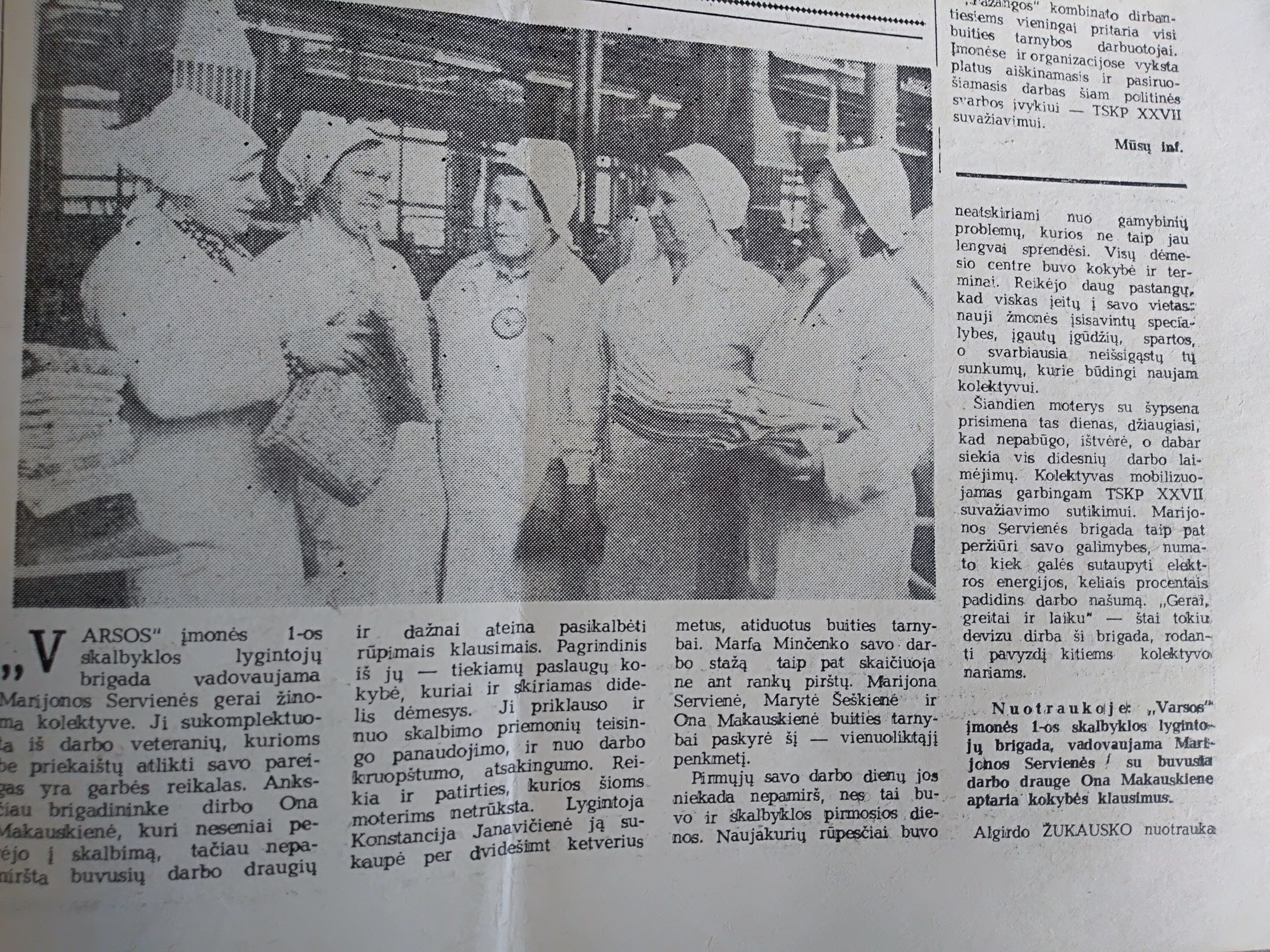
The primary focus of my second Thesis’ research was women’s participation in women’s councils and trade unions. Due to the employment politics of the Soviet Union and the five-year planning of production, the workerist doctrine of the Soviet state was taken into account when women’s participation in women’s councils and in trade unions were analysed. A key problem addressed in the research was the exclusion of the development of Soviet industrial relations from the historical analysis of women’s councils and trade unions activities.
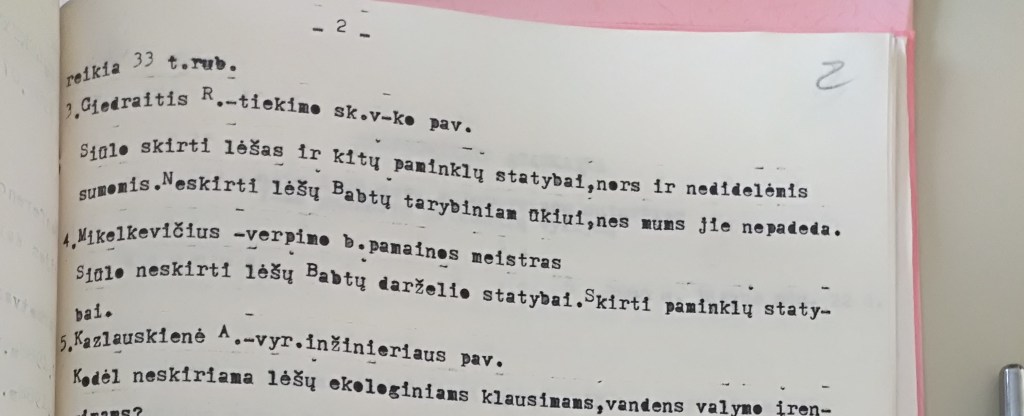
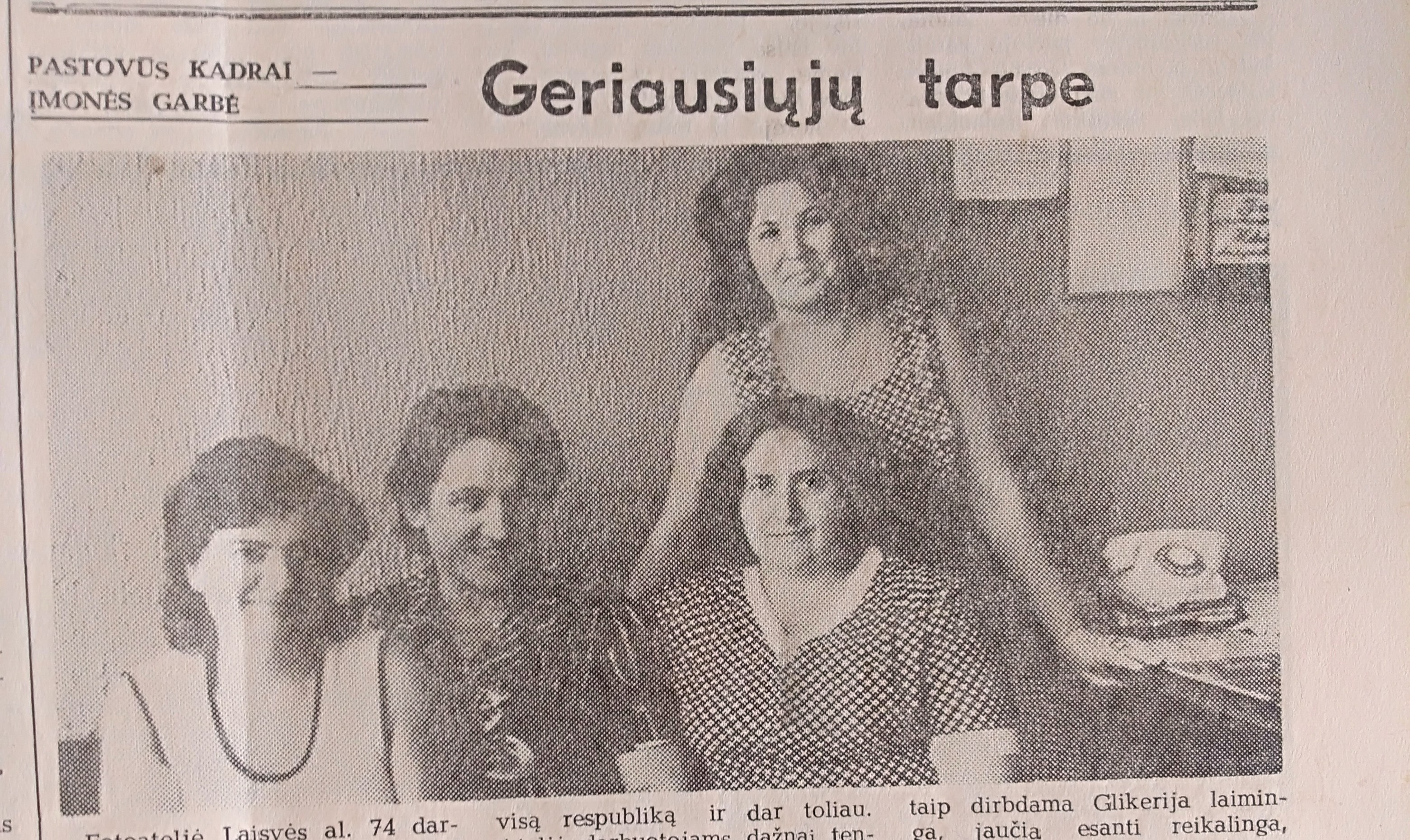
My main material was the meetings’ minutes of trade unions and women’s councils in 6 mainly textile factories of Kaunas. It was an experience on its own to be in the archive and to run through all those 3 years as I mainly focused on the time of Perestroika just before all the transformation, the intensified struggle for independence, the Neoliberal Turn etc. There were so many gaps in my research that I see it as incomplete artwork on which I have mingled for so long. The need to develop it into something substantial was haunting me ever since. Should it be an archive but in what way?
When thinking of the archive I have to mention Clare Hemmings who has devised a theoretically advanced methodology of the imaginative archive as a site in which she establishes a relationship with the historical figure and their political sentiments based on her own political passions and the political questions of the present. While she applied the method in her book of 2018 Considering Emma Goldman drawing on experiences from queer theory and postcolonial literary studies, she reconstructed sources that have not been preserved for historical reasons; and wrote them as part of an imaginary dialogue with Goldman herself, creating a new archive, “one that has yet to be written or read.”
It is exactly what I am seeking to do with the archive of my own, therefore I am calling it the imaginary archive where something is still to be rediscovered in the open ended dialogue with the women I have talked to. Since archives of workers’ history today are also places “to remember hopes turned into no- places, something that no longer exists.”
 Imaginary archive